
Every time I visit the Himalayas, I leave a part of myself there. And I bring back a stronger version of me. Annapurna Base Camp (ABC) felt exactly like those simple days, hard climbs, and the views that stay’s with me.
The Experience:
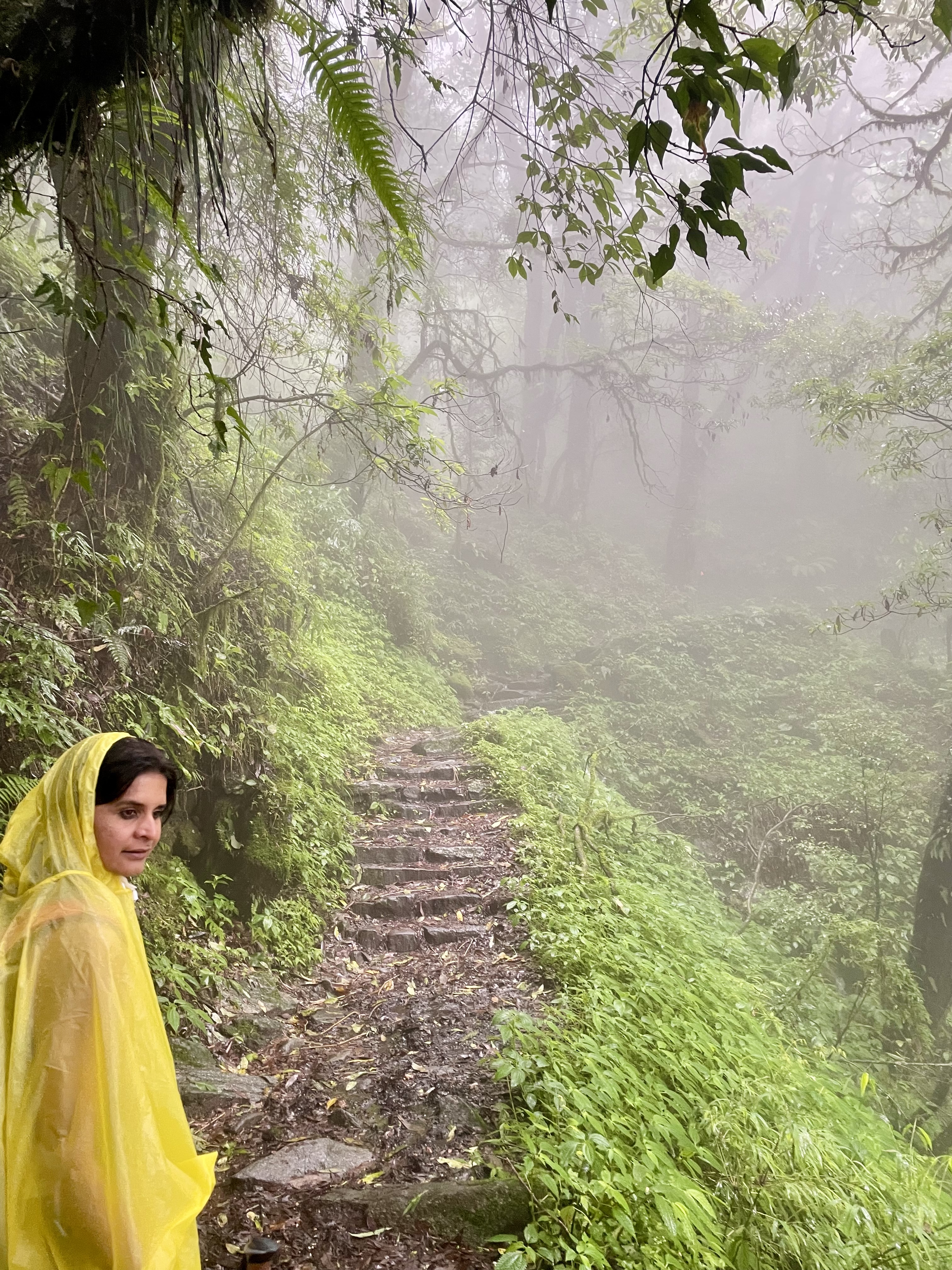
It was the summer of 2023; with one of my cousin brother – Deepu, we started our journey via Kathmandu. It was his first time, and he had no clue what he was getting into. It was a 7-day trek to reach the base, then a descent down. This time of year, the regions get a lot of rain. I was told that it is difficult to see the mountain ranges clearly due to the clouds. I wanted to experience the rains, waterfalls, and the beautiful forests in the region, and this was the best time.
We started early in the morning. The trail was gradual. It had steep ups and downs through terraced fields, rhododendron forest, and higher alpine terrain. The entire trail had steps to climb up and down. This was difficult because my knees were ready to give up. We rested in tree houses and that gave a relief to the knees to get started again for the hike.
Our route was the usual. Each stop has its own feel. Chhomrong has long stone steps and big views. Sinuwa/Bamboo offers a damp forest and many leeches. Dovan/Himalaya features waterfalls and quiet tea houses. Deurali presents thin air and early nights. And Annapurna is serene like an open bowl of mountains.
We trekked in the drizzling rain. The sky was rarely clear, it rained most days, and leeches were part of the routine. It was startling to learn after the fact that leeches had climbed to my shoulders and drawn a lot of blood. I only found out when my brother pointed out the blood marks on my jacket.
I called it a “monsoon and waterfall trek.” We were mostly drenched, sometimes cold, and moved at a steady, honest pace. The waterfalls on the way had blocked the trails in multiple places. Crossings required caution, a skill that the guide and locals had. We built small bridges over the streams of water to cross them. We were worried that one small misstep could lead to a disastrous incident.
The final stretch to ABC is on moraines. A moraine is a mound of unsorted rock, dirt, and sediment. It is deposited by a moving glacier. When we reached the camp in the evening, the clouds were thick, and we couldn’t see any peaks. Locals told us this time of year, the sky often stays closed. We went to bed disappointed, thinking, was it all vain? We thought at least the journey was beautiful, if not the destination.
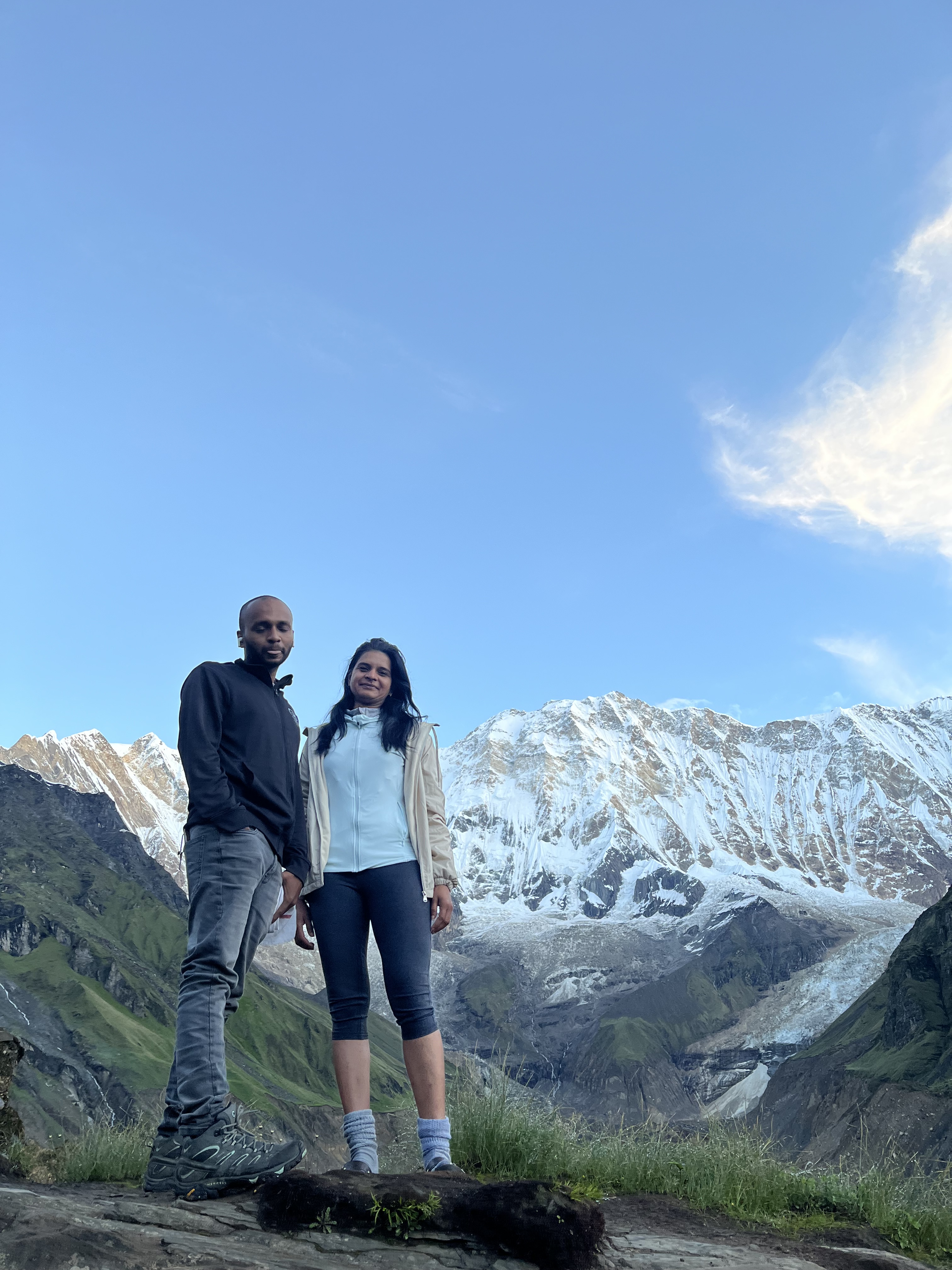
At 3:30 a.m., the miracle happened. Our guide knocked on the door. He asked us to step out quickly. The clear sky revealed stars, the Milky Way, and the Annapurna range in full view. No noise, just mountains. We stood surrounded by the amphitheater of peaks—Annapurna, Gandharvachuli, Machapuchhre—and the view did the work. Knee pain, leech bites, being drenched, short sleep, the usual altitude headaches—all of it faded. Moments like that pay for the hard days. Deepu had a moment.
What we learned:
The trek was strenuous and quiet at times. Yet, I came home with a simple lesson: go slow, respect the mountain, and keep showing up. You learn from the good views and the tough weather. This is a story of transformation. By moving slowly through rain, mud, leeches, and pain, we discovered resilience. I found humility and a deeper connection to the natural world. The hard, monotonous days teach patience. They also instill respect for forces bigger than you. The sudden, breathtaking reveal of the peaks at 3:30 a.m becomes the payoff that makes every struggle meaningful.
The journey shows that growth often comes through persistent effort. It also shows that quiet endurance is key. The best rewards are earned by showing up, step by step.
After all, it’s all in the mind – Patience over Pace, Presence over panic.
Video of our Journey:
Please share any Comments or Suggestions
Navigation to pages:
Go to Home Page